Why Regular Electric Motor Maintenance Is Essential for Long-Term Performance
Learn why electric motor maintenance is crucial for performance, safety, and cost savings. Discover professional tips and service intervals every business should follow.
12/22/20253 min read
Why Regular Electric Motor Maintenance Is Essential for Long-Term Performance
Meta Description: Learn why electric motor maintenance is crucial for performance, safety, and cost savings. Discover professional tips and service intervals every business should follow.
Understanding the Importance of Electric Motor Maintenance
Electric motors power the heart of countless industries — from manufacturing lines and HVAC systems to water pumps and elevators. However, despite their reliability, these machines are not invincible. Just like any piece of mechanical equipment, electric motors require regular maintenance to operate efficiently and safely.
Without proper care, small issues like dirt buildup, worn bearings, or misalignment can escalate into costly breakdowns and extended downtime. Preventive maintenance ensures your motors continue running at peak performance while extending their service life.
What Happens When You Skip Maintenance?
Neglecting motor upkeep is a silent profit killer. When a motor runs with worn bearings or clogged ventilation, it overheats, draws excess current, and loses efficiency. Eventually, insulation damage or rotor imbalance can cause complete failure — often at the worst possible time.
The Hidden Costs of Neglecting Electric Motors
An unmaintained motor not only disrupts operations but also drives up energy bills. In many industrial settings, motor inefficiency can increase energy consumption by 10–20%. Add in repair or replacement costs, and skipping maintenance quickly becomes far more expensive than preventive service.
Key Benefits of Regular Motor Maintenance
Improved Efficiency and Performance
A well-maintained motor runs cooler, draws less current, and delivers steady torque. This means less strain on connected equipment and a smoother, more reliable production process.
Extended Motor Lifespan
Routine inspections help identify wear and tear early. Replacing bearings or cleaning airways before failure can double a motor’s operational life.
Reduced Energy Consumption
Motors in good condition consume less energy. According to the U.S. Department of Energy, proper maintenance can reduce power costs by up to 15%.
Enhanced Workplace Safety
Faulty wiring or overheating motors pose fire and shock hazards. Maintenance minimizes these risks, keeping both equipment and employees safe.
Common Electric Motor Maintenance Tasks Explained
Bearing Inspection and Lubrication
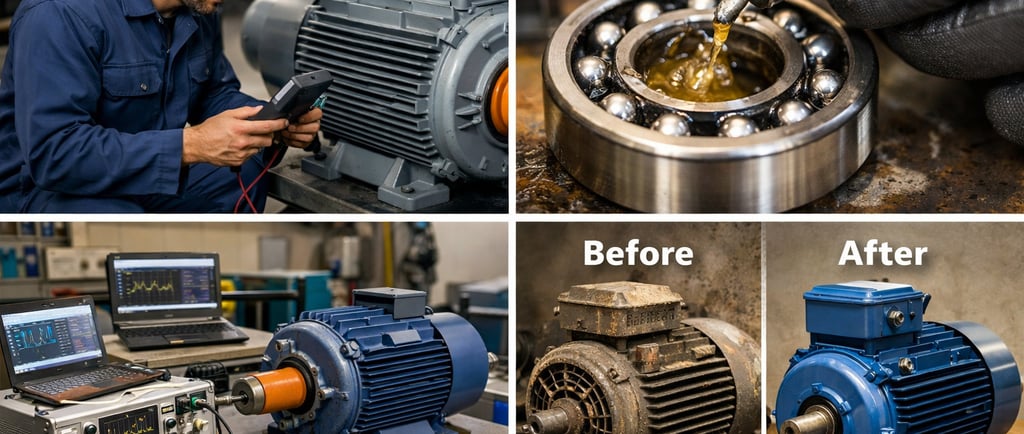
Bearings are among the most common failure points. Regular lubrication prevents friction, overheating, and mechanical wear.
Cleaning and Cooling System Checks
Dust and debris can block ventilation, causing motors to overheat. Regular cleaning and cooling checks prevent this.
Vibration and Alignment Testing
Misalignment leads to excessive vibration, reducing efficiency and damaging shafts. Using vibration analysis helps detect imbalance early.
Electrical Testing and Insulation Resistance
Checking insulation resistance ensures there are no shorts or voltage leaks. It’s a vital part of predictive maintenance.
How Often Should Electric Motors Be Serviced?
Factors That Affect Maintenance Frequency
Operating environment, duty cycle, and load levels all impact how often maintenance should be done. Motors exposed to dust, moisture, or extreme temperatures require more frequent checks.
Recommended Service Intervals for Industrial Motors
Light-duty motors: Every 6–12 months
Industrial motors: Every 3–6 months
Critical applications: Monthly inspections
Signs Your Motor Needs Immediate Attention
Unusual Noises and Vibrations
Grinding or humming often indicates bearing or alignment issues.
Overheating or Excessive Power Draw
A sudden rise in temperature or current usage is a clear warning sign of mechanical or electrical problems.
Reduced Output or Irregular Operation
If your motor’s performance drops or becomes inconsistent, it’s time for a professional inspection.
Professional Maintenance vs. DIY — What’s Better?
The Value of Expert Diagnostic Tools
Professional technicians use thermal imaging, vibration analysis, and megohm testing to detect issues invisible to the naked eye.
Safety Considerations for Technicians
High-voltage testing and disassembly should only be done by qualified personnel with the right safety gear.
Choosing the Right Electric Motor Repair Shop
Certifications, Experience, and Equipment Matter
Always choose a shop with certified technicians, proper diagnostic equipment, and a proven track record.
What to Ask Before Hiring a Service Provider
Do you provide a detailed inspection report?
What brands or types of motors do you specialize in?
Are emergency repair services available?
(For more details, visit the U.S. Department of Energy’s motor maintenance guide.)
FAQs About Electric Motor Maintenance
1. How often should electric motors be serviced?
At least once every six months for light-duty motors and every three months for heavy-duty ones.
2. Can regular maintenance reduce energy bills?
Yes, efficient motors use less electricity and prevent costly energy losses.
3. What’s the most common reason motors fail?
Bearing wear and insulation breakdown due to overheating or contamination.
4. Is predictive maintenance better than routine maintenance?
Predictive maintenance uses data to anticipate failures, offering better reliability and cost savings.
5. Should I replace or repair an old motor?
If repairs cost more than 60% of replacement, replacement is usually the better option.
6. Can I perform maintenance myself?
Basic cleaning and lubrication, yes — but electrical testing should be left to certified professionals.
Conclusion: Invest in Maintenance Today for a Trouble-Free Tomorrow
Regular electric motor maintenance is the foundation of reliability, safety, and efficiency. By scheduling consistent inspections and trusting a certified repair shop, you can prevent costly failures and keep your equipment running smoothly for years to come.